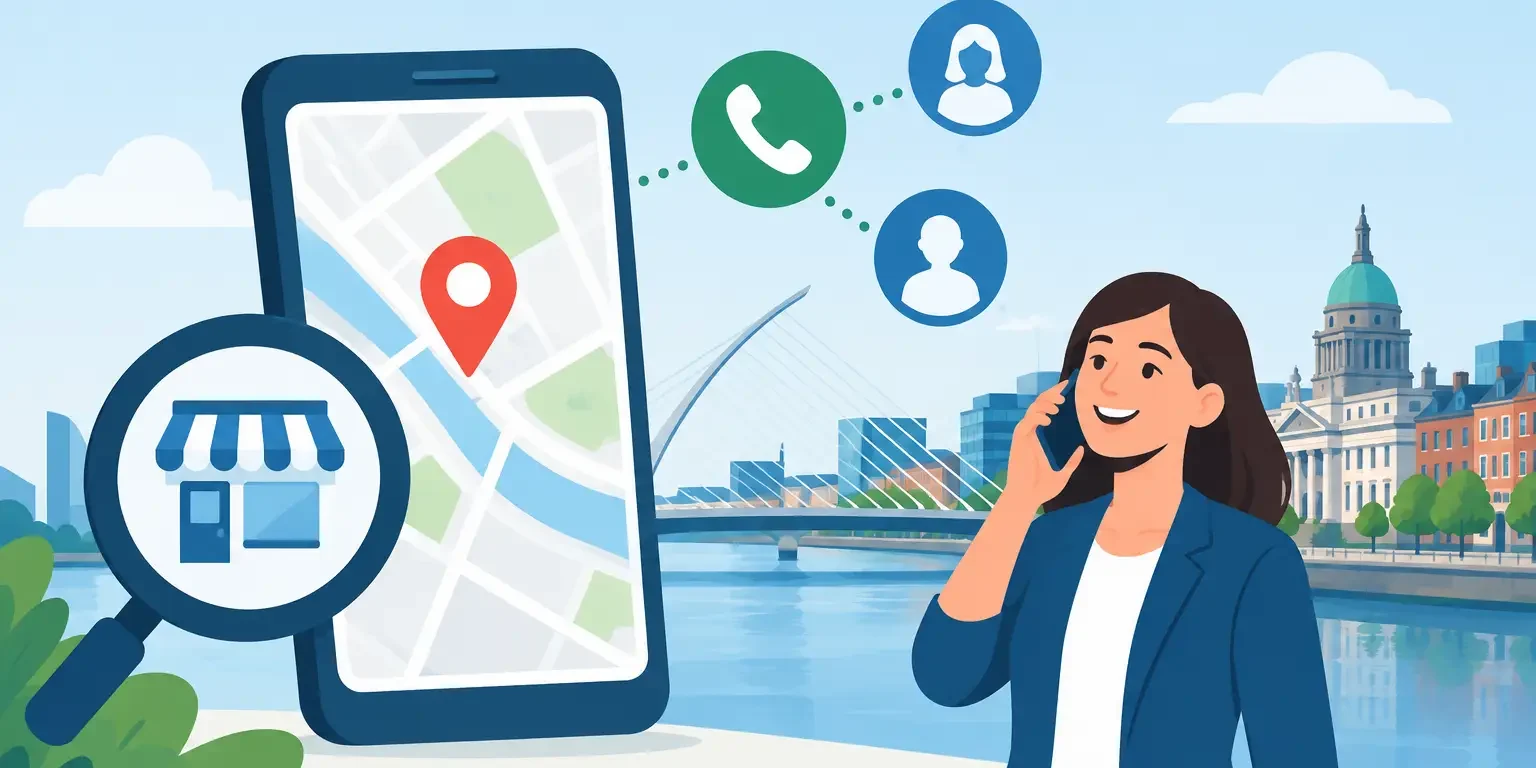
A customer searching “emergency plumber near me” in Rathmines or “best solicitor Dublin 2” is usually ready to act. They are not looking for a marketing lecture. They want a trusted local business, clear contact details, strong reviews, and a fast way to call, book, or get directions. That is exactly where local SEO Dublin makes a commercial difference.
For a Dublin business, showing up in local search is not simply about getting more website traffic. It is about being visible at the moment a nearby customer needs what you sell. A well-built local presence can generate phone calls, quote requests, bookings, store visits, and higher-quality leads before a potential customer ever scrolls to a competitor.
What local SEO Dublin actually does
Local SEO helps Google understand three things: what your business does, where you operate, and why local customers should trust you. It influences visibility in Google Maps, the local results that appear beneath a map, and standard organic search results.
If you run a restaurant in Dublin 8, a dental practice in Swords, or a roofing company covering South Dublin, your ideal customer may use a different search phrase. One person searches by service, another by neighborhood, and another by problem. Local SEO connects those searches to accurate business information, relevant website pages, and proof that real customers rate your service.
The goal is not to rank for every phrase in Ireland. That wastes effort and often brings visitors who cannot become customers. The goal is to appear for searches that match your service area, your offer, and your capacity to deliver.
Start with your Google Business Profile
Your Google Business Profile is often the first impression people get of your business. It can appear before your website in Maps and local results, which means incomplete or outdated information can cost you calls.
Your profile should use your real business name, the most accurate primary category, a clear description, current phone number, website address, hours, and service areas. Add high-quality photos that show your premises, team, completed work, food, products, or vehicles. Generic stock images rarely build confidence when someone is comparing local options.
Keep the profile active as well. Update holiday hours, respond to questions, publish relevant updates when appropriate, and make sure customers can contact you without hunting for details. A closed business listing on a busy Saturday, or an old phone number on Maps, is a simple mistake with an expensive outcome.
Categories deserve particular care. A business can offer several services, but the main category should reflect the core service customers are most likely to search for. Secondary categories can support the picture, but choosing every possible category makes a profile less focused, not more useful.
Build a website that turns local searches into inquiries
Google Business Profile visibility is powerful, but it should not be your entire local strategy. Your website gives you room to explain your service, demonstrate credibility, and guide a customer toward the next step.
Every core service needs a useful page written for real customers. A page for commercial cleaning, for example, should explain what is included, who it is for, the locations served, what makes the company reliable, and how to request a quote. It should not be a thin page that repeats “commercial cleaning Dublin” twenty times.
For businesses serving multiple areas, location pages can help when they add genuine value. A plumber may have a page for Dublin 6 and another for Dublin 14 if each page addresses the services available there, local response arrangements, customer needs, and relevant proof. Copying the same page and swapping neighborhood names is a weak tactic that helps neither search engines nor customers.
Your contact details must also be easy to find. Use the same business name, address, and phone number across the website and major business listings. Add clear calls to action such as “Request a Quote,” “Call Now,” or “Book a Consultation.” Mobile users should be able to take action in seconds, not wrestle with a slow contact form.
Website speed matters here. A potential customer who taps a listing, waits for a page to load, and leaves has not become a lead. Mobile-responsive design, secure hosting, clear navigation, and landing pages built around conversion are all part of practical local SEO.
Content should answer the questions customers ask
The best local content is rarely written to impress other marketers. It answers the questions that hold customers back from contacting you. Share pricing guidance when it makes sense, explain your process, set realistic timeframes, and show the type of work you handle.
A family law firm may explain what happens in an initial consultation. A painter may show before-and-after projects and explain how estimates work. A restaurant can publish accurate menus, booking details, and event information. This content helps customers make a decision while giving Google clear context about your business.
Reviews are a ranking signal and a sales tool
A strong star rating can move the decision before a customer even reaches your site. Reviews tell local searchers whether you are reliable, responsive, professional, and worth contacting. They also give you a steady source of real customer language about your services.
Ask for reviews consistently after a successful job, completed appointment, delivery, or visit. Make the process easy, but never pressure customers or offer incentives in exchange for positive feedback. Genuine reviews create stronger long-term trust than a sudden batch of suspicious five-star ratings.
Respond to every review with care. Thank happy customers specifically rather than pasting the same reply each time. For a negative review, stay calm, acknowledge the concern, and offer to resolve it privately where appropriate. Do not argue in public. Future customers are watching how you handle problems as much as they are reading the complaint.
For some Dublin businesses, reputation management will make a bigger immediate impact than publishing another blog post. If your competitors have 150 recent reviews and you have 12 from three years ago, that gap is visible to everyone.
Build local authority without shortcuts
Google also looks for evidence that your business is established and trustworthy. Accurate listings in relevant directories, mentions from local organizations, and quality links from credible Irish websites can all support local visibility.
The key word is quality. A link from a local business association, community sponsorship, supplier, professional body, or respected publication can be useful because it reflects a real relationship. Hundreds of low-quality directory links or paid spam links can create risk without producing meaningful leads.
Look at opportunities already connected to your business. Perhaps you sponsor a local team, work with a charity, host an event, supply another local business, or belong to a trade organization. These relationships can create legitimate local signals while also putting your name in front of potential customers.
Measure leads, not vanity rankings
Ranking number one for a phrase that never generates a call is not a win. Good local SEO reporting should connect visibility to commercial activity: phone calls, form submissions, direction requests, booking clicks, quote requests, and revenue where tracking allows.
Track which pages produce inquiries and which searches bring the most valuable customers. A business may discover that “same-day electrician Dublin” drives fewer visits than a broad term but produces far more qualified calls. That insight should shape the next round of website content, Google Business Profile updates, and paid search activity.
Local results also change by searcher location, device, competition, and intent. No agency can honestly promise a permanent number-one position for every search. What matters is steady improvement in the searches that lead to profitable work, along with a plan to protect and build on that visibility.
Local SEO is ongoing, because Dublin competition is ongoing
A one-time setup gives your business a foundation, but competitors keep collecting reviews, improving their websites, adding services, and running campaigns. Your own hours, offers, staff, locations, and customer expectations change too. Local SEO needs regular attention to stay accurate and competitive.
That does not mean every business needs the same level of work. A single-location service provider may benefit most from profile management, reviews, service pages, and a handful of strong local citations. A multi-location company or highly competitive practice may need ongoing content, technical SEO, reputation support, local landing pages, and backlink outreach.
Boost Marketing helps Dublin businesses bring these moving parts together, from a professional website and Google Business Profile work to reviews, local search visibility, and conversion-focused pages.
Start with the customer standing on a Dublin street, searching on a phone, and choosing between three nearby businesses. Make it obvious what you do, where you work, why people trust you, and how to contact you. That is how local visibility turns into real business.